CZ | EN
aktualita THROUGH THE LABYRINTH30|06|2024 - 30|11|2034
GASK – Galerie Středočeského kraje, Kutná Hora

In our search for the best way of approaching GASK’s new permanent exhibition, we found inspiration in today’s dramatically changing world full of challenges, upheavals and crises – a world in which each of us is a protagonist in his or her own life story. 
Solo
LVX MICA
23. 5.. – 30. 7. 2026  Galerie 50°47'55.9"N 14°57'22.6"E 
Andělská Hora 16, Chrastava 463 31

curator: Petr Vaňous

**LVX MICA. The Light of Mica.**
A light that is not light in the traditional sense, but rather its residue, its sediment, its memory. Here, Miloš Šejn does not install a work in the conventional meaning of the word — he opens a situation. A situation unfolding on the threshold between a gesture and its reverberation, between matter and its dispersion, between the visible and the audible.

The space of the former sacral interior in Andělská Hora, reduced to an almost ascetic white prism, is not merely a frame. It is an active field in which different temporal layers converge: the geological time of mica, the historical time of architecture, and the ephemeral time of the artist’s performative intervention. Šejn enters here as a medium rather than a creator in the traditional sense — his gestures are not acts of composition, but rather acts of listening to the material and to the site.

The ritual pouring of water and scattering of tiny fragments of mica creates a landscape that resists fixation. It is a landscape in motion, a landscape that emerges even as it disintegrates, a landscape referring both to primordial sediments and to the immediacy of the here and now. This “snow-like radiance” is not an image but an event — a fragile configuration of light, matter, and time.

The parallel sonic layer, based on the delicate ringing of fragments of silver slag, opens another plane of perception. Sound here does not function as accompaniment, but as a latent structure of the space itself, permeating it and destabilizing its apparent emptiness. The silence surrounding the installation is therefore not an absence, but a condensed presence — a space in which that which usually escapes perception may become visible.
 
 
Ani labuť ani Lůna
7. 6. - 29. 9. 2025 Gallery of Art in Litoměřice, Church of the Annunciation of the Virgin Mary
curator: Alena Beránková

https://www.galerie-ltm.cz/2025/06/04/milos-sejn-ani-labut-ani-luna/
 
ZATVÁŘÍ / COUNTENANCE
6. 5. - 22. 6. 2025 ATELIÉR JOSEFA SUDKA, Praha
curator: Petr Vaňous

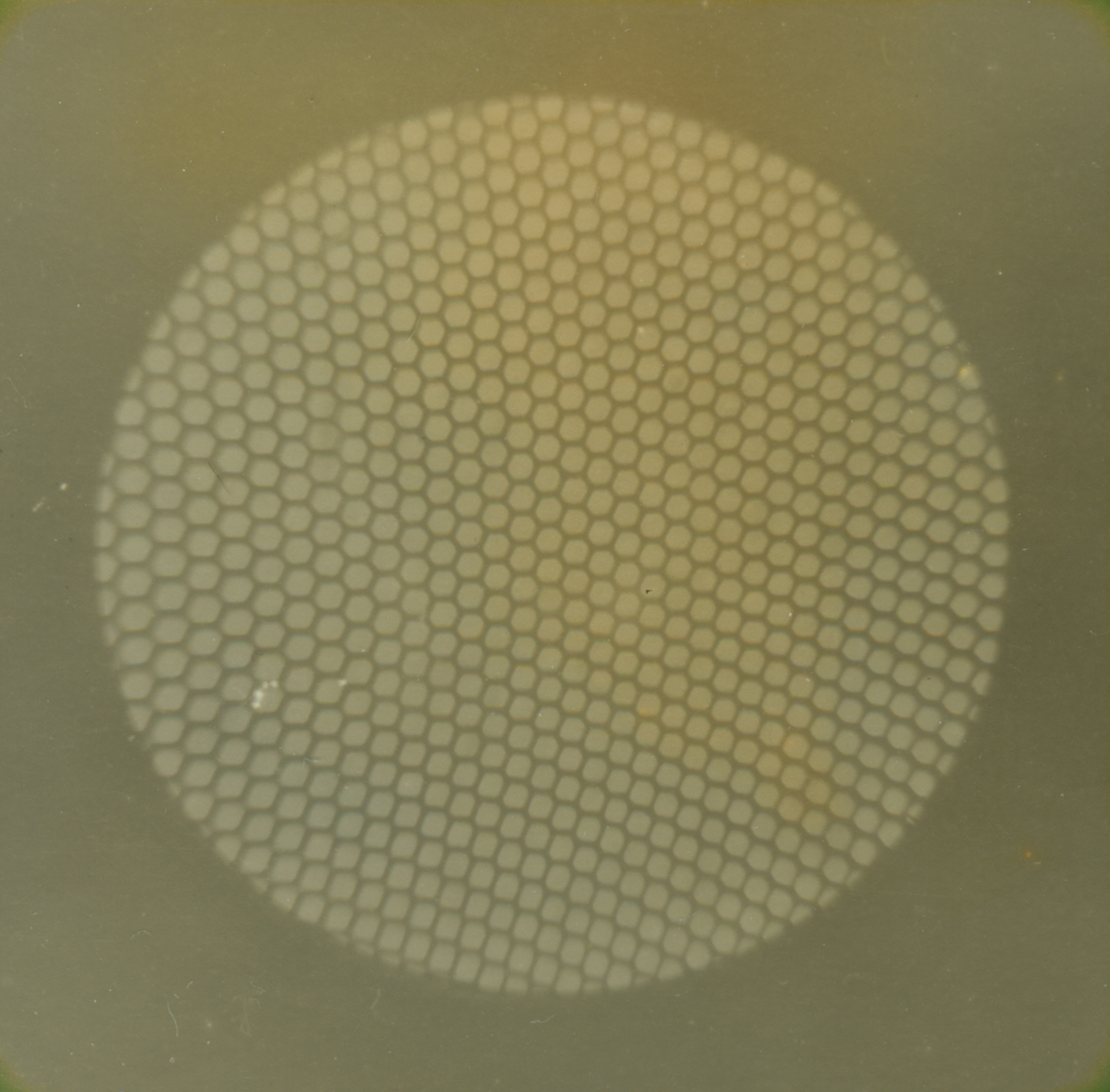
Eye of the fly, 1959
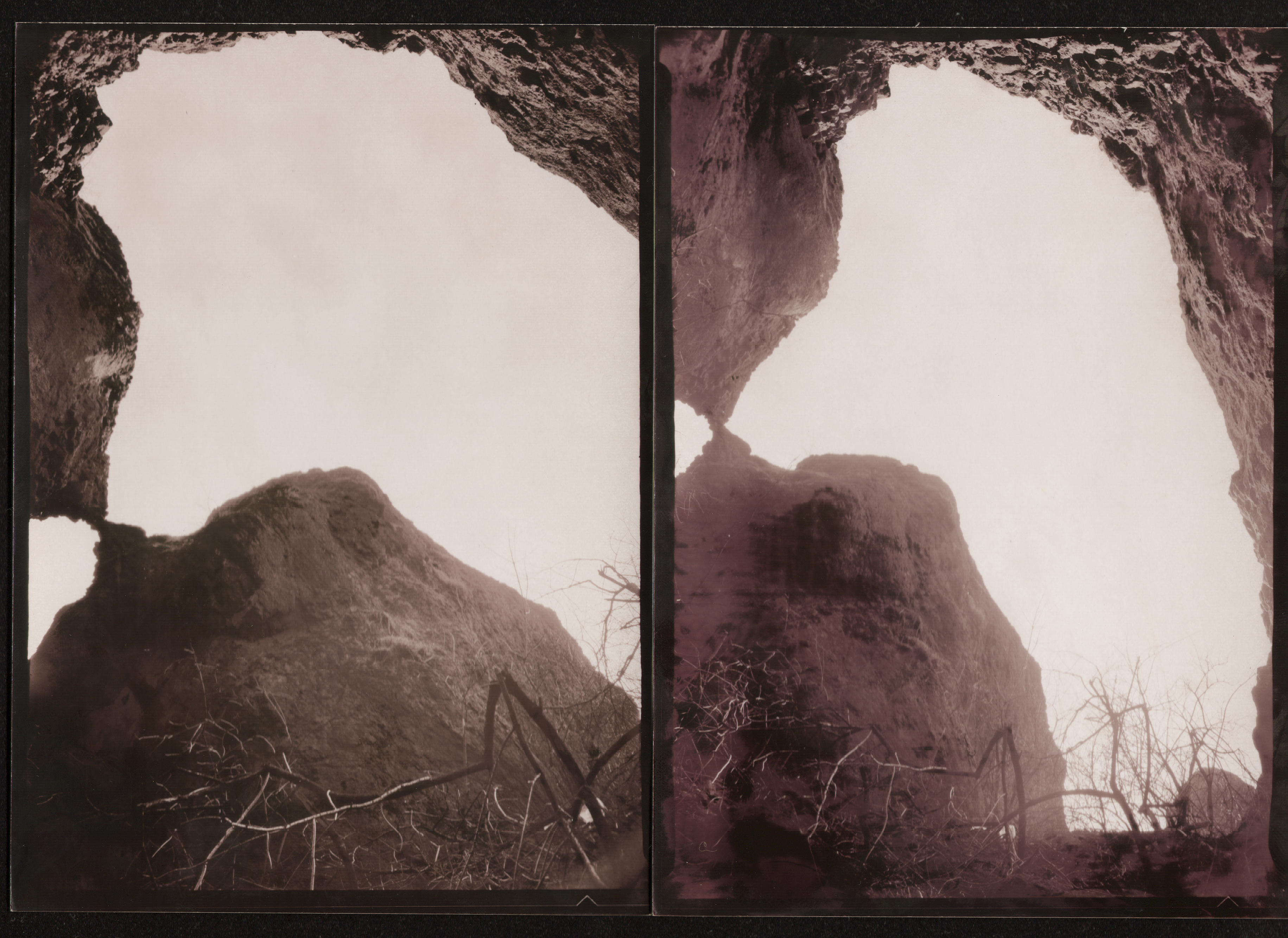
Zebín hill and Sun, 1983

ZATVÁŘÍ / COUNTENANCE
 
 
With his multilayered work, conceptual artist Miloš Šejn (1947) enters the world of phenomena in order to communicate the core and contours of human presence in a new and distinctive way.

These are not only phenomena associated with the complex perception of place and time on their most general and essential levels. Often, it is also an exploration of incidental relationships that are hidden, obscured, or layered over time, relating to human memory, personal history, factual events, and mémoire involontaire. A particular phenomenon of this kind is the family memory of the sculptor Hana Wichterlová (1903–1990), who maintained a studio in Újezd, not far from Josef Sudek's studio, and whom Miloš Šejn knew personally as a child.

The exhibition layout for the Josef Sudek Studio creates an intersection of place, time, memory, and
media traces (photographs, videos, drawings). Sudek's photograph of Wichterlová's sculpture, entitled Black Head, plays a significant role here. Her closed eyes serve as the trigger for events, with inner vision as their main referent — the vision that connects the hiddenness of thought with the face of what is seen. Whether it be a human face, a face encountered as a metaphor for a place, a window, or a view. This theme is also reflected in the title of the exhibition, COUNTENANCE / ZATVÁŘÍ. The Czech neologism precisely captures the territory where any fleeting experience transforms into a timeless, lasting essence — an essence that does not disappear by being forgotten but, once formulated, continues to exist forever within a different order of validity.
 

Petr Vaňous
www   

 
VYVOLANÉ OBRAZY
10. 12. 2024 – 16. 3. 2025 | Galerie Rohovka – Vzlet, Praha
kurátor: Miloš Vojtěchovský 
VZLET
Vyvolané obrazy
Group
Distorted Image. Chapters from the beginnings of video art
29. 4.. – 16. 8. 2026  House of Art, Brno

Curator: Lenka Dolanová

The exhibition explores the beginnings of video art in former Czechoslovakia, and later in Poland and Hungary. It covers the period from the late 1960s to the mid-1990s. The selection of key events and artworks cannot be separated from the broader social and political context, which largely determined access to technology, approaches to working with video imagery, and the possibilities for sharing it. Through examples of works from different countries, the exhibition encourages viewers to look for differences as well as parallels and points of connection.

The exhibition includes experimental films, recordings of performances and actions, and early animations, which together provide a comprehensive view of the development of this art form. An important part of the exhibition is independent video magazines and news coverage on politics and culture distributed on videocassettes (including Originální Videojournal, Videomagazín Vokna, Videomagazín Karel Kyncl, and Infermental). In addition to single-channel video, the exhibition features various forms of video installations and video sculptures, many of which survive only in documentation.
 
The title refers to a situation in which images were deliberately or unintentionally distorted and manipulated. Experiments were conducted with analog and digital imagery, television transmission, and the television set as an object, questioning the very ability of images to convey truth. At the same time, it suggests that from today’s perspective it is difficult to present the development of video art in its entirety. Access to sources is already challenging: materials are scattered across private and public collections, artists’ archives, in various stages of digitization, or still stored in attics and cellars on historic and slowly degrading media. Very few institutions in the Czech Republic or other Central European countries actively collect and preserve video art, and almost none focus on video installations. When exhibiting historical works, questions arise about the proper way to present them, and to what extent they can be reconstructed or reproduced. 

Vladimír Ambroz, Béla Balázs, Michael Bielický, Gábor Bódy, Wojciech Bruszewski, Filip Cenek, Jiří Černický, Jennifer DeFelice, Izabella Gustowská, Ágnes Háy, Tibor Hajás, Károly Halász, Vladimír Havlík, Vladimír Havrilla, Lumír Hladík, Milan Kohout, Anna Kutera, Karel Kyncl, Adéla Loučanská, Jolanta Marcolla, Dóra Maurer, Zdeněk Mezihorák, Ilona Németh, Miroslav Nicz, Marian Palla, Radek Pilař, Józef Robakowski, Peter Rónai, Tomáš Ruller, Zbigniew Rybczynski, Petr Skala, János Sugár, Lucie Svobodová, Miloš Šejn, Ivan Tatíček, Jaroslav Vančát, Petr Váša, Woody Vašulka, Janka Vidová-Žáčková, Petr Vrána, Martin Zet, Grzegorz Zgraja, Jana Želibská

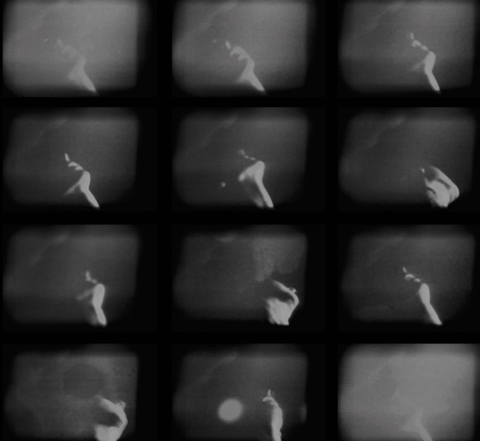
Miloš Sejn: Psychodrama, 1970, documentation of an action, black and white film 8mm, digitised

web


Focused View
18. 4. – 4. 5. 2026 Galerie Škroupovka / KK3, Hradec Králové

Geometry, rhythm and visual order as a challenge to attentive perception – the exhibition Focused Gaze, originally presented at the Abstract Project Gallery in Paris, is now shown by the Czech Club of Concretists (KK3) in Hradec Králové.
The Club of Concretists was founded in 1967 as a platform for artists devoted to non-figurative, geometric and conceptually oriented work. The exhibition presents works by seventeen artists and one artistic duo across generations and also includes the work of an invited guest.
The presented works show a wide spectrum of approaches to concrete art: from painting, printmaking and spatial objects to work with line, structure and text as well as digital print, generative processes and light-kinetic installations.
The exhibition reminds us that concrete art is not only a historical chapter of modernism but still an open field of experiment. 
 
KK3
 1. – 12. 4. 2026 Galerie Abstract Project, Paris


BROTHER TREE / BRATR STROM – Jaroslav Anděl & Lenka Falušiová & Miloš Šejn
28. 3. - 29. 5. 2026 Kostel sv. Mikuláše a sv. Anny, Telce

There in the trees, by a strange power,
a spell lies hidden…

— Joseph von Eichendorff

In recent times the tree has become one of the subjects of environmental protection. It has become
clear that even solitary trees in the open landscape and in the immediate surroundings of human
habitation must be preserved. The environment in which humans lived for tens of thousands of years consisted predominantly of plant vegetation. According to some views, the sudden absence or
scarcity of trees could have a negative effect on the human psyche.
The tree, however—as some works in the exhibition demonstrate—is not only an object of
ecological concern, but can also be its symbol; it can become the embodiment of the values of the
environment. This fact has deeper reasons. The tree belongs among the oldest motifs in visual art as
well as in literature, and its image runs through the entire cultural history of humankind. Since
ancient times, the tree has been one of the principal themes of human imagination.

Jaroslav Anděl
 

Performance
žlut načer oran
22. 11. 2025 | GASK Kutná Hora, Dalibor Chatrný 100 - konference 

Forms of relationships between text and path/trace in space. The personal body and the body of the universe. Being and becoming. Place, places, non-places. Phonemes and eternity.
Performative lecture, approx. 15 minutes, combined with projection.
 
Deset doteků
10. 9. 2025 | KAVKA, Praha 
 
Rerformamatteurs
David Helán / Tomáš Ruller / Miloš Šejn

Conditions of Art / Performance Festival 31. 8. 2025
PRAGOVKA GALLERY
Kolbenova 923/34a, 190 00 Praha 9
 
Trojneférformeří plodještěři kapacitoslavce, proformaautorů předestihne na pevné podstavě literárně nonsenzuální nezavázaného spavce, předeimprovizorium tělesnosti, psa a savce, psavce, abrakababrák a sice sytě nespacifikovatelné přemrštěně odreagovatělé, nebezpečně nesčeřeně, bez čeřeně bezvečeře nepečeně zpečetěně, desatera jesetera ecetera zkoncenprněle stěže specifikovatelné psotník, časoprůzorově za hranicemi zábran zahraď hydroničeným, tni jazykům ctnosti, slovo osol sobě, posel nepopošel samo o sově, osel napapouščen až o uzel v první osobě. Bdělej jelen vtělen jedem jedněm tělem, shalomé polámanej zpomalenejm slalomem, black sabatikán dělej spěchej prdlej sprše prchej, děj se dědem, jeden, dva, tři vzpěněj bědem předepělejm dětem vzadu nadváhu, nedělej se jen se vzdělej, dřepem křepěj, na jazykovědomém základu, pepřem předem přenejm lpěj ze mě spěj sem steč na váhu, strč sněm prsteník vstřeh popostrč těm návnadu. 
 
9. festival performance
28. - 30. 9. 2024 | Galerie Ferdinanda Baumanna, Praha
9. festival performance / Letná
9. festival performance / Veletržák

Special
VIDINY
19. 8. - 23. 8. 2026 | Festival vizuální tvorby, Třeboň 

VIDINY is a five-day festival of contemporary visual art that brings new energy, installations, and interdisciplinary artistic practice to Třeboň each year.
The festival’s aim is to create a creative and inspiring environment for interdisciplinary encounters and the presentation of contemporary visual and performance art. Its programme includes exhibitions, installations in public space, concerts, VJing, film screenings, video projections, discussions, and other networking events.
The VIDINY Festival is organised by Spolek stopět in cooperation with VIDINY z. s., who have long been responsible for its concept, programming, and production. Together, they create a platform for contemporary visual art and support the development of new projects across different disciplines.
Their aim is to connect artists and creators, open up new perspectives, and bring high-quality cultural content into public space. VIDINY is the result of this ongoing work and of a sustained effort to build a strong, open artistic community.

vidiny.cz  
 
JÍT NALEHKO ANEB JAPONSKÉ INSPIRACE
17. – 23. 8. 2026  Klášter Broumov

JÍT NALEHKO ANEB JAPONSKÉ INSPIRACE / seminář
--- o stoletém kulturním dialogu Česka s Japonskem / věnováno Antonínu L í m a n o v i
--- Klášter Broumov, 17.-23. srpna 2026
--- Lektoři: Ivo Hucl, Robin Šóen Heřman, Mari Shinada, Zdeňka Švarcová, Pavel Janšta a Hiromi Ogata, Luděk Čertík, Miloš Šejn, Jan František Bím, Ondřej Landa, Tomáš Hrůza, Pavel Mrkus a Klára Mrkusová, Kateřina Horáčková, Jiří Zemánek 

 
ELBE LAB
15. 8. - 16. 8. 2026 | Torhaus Wehlen 

Elbe LAB is a temporary laboratory in the landscape that engages with place, river and border. Against the backdrop of global threats, its DNA contains an interdisciplinary dialogue between artists, environmentalists and hydrologists, addressing the urgency of the Anthropocene and the climate crisis, as well as imaginary connections, visions and speculative scenarios for the future. At the same time, however, it seeks ways forward through being itself — through presence and lived experience. It creates another story of flowing water, linking it to the Czech longing for the sea.
A series of performances in and for the landscape will reveal the artistic research of Czech and German artists into the phenomenon of the River Elbe at the border between the two countries. It will engage not only with the element of water itself, but also with the profound philosophical, cultural and historical relationships between human beings and the river.
The ELBE LAB event will take place at two locations: on Saturday at the former Prossen Hafen harbour in Bad Schandau, and in Schmilka at the border crossing.
 
 
Bohemiae Rosa
4. – 9. 8. 2026  Bohemia FARMSTUDIO, Vysoká 26, Czech Republic
International Interdisciplinary Open-Air Workshop for artists and dancers exploring the relation between body, art and landscape
led by Frank van de Ven & Milos Sejn


Since 1995 Milos Sejn and Frank van de Ven have co-operated in their bi-annual interdisciplinary open-air Body-Site-Exploration projects in various National & Cultural Reserves in the Czech Republic (Kokorin Valley, Plasy Monastery, Bohemian Karst, Bechyne Monastery with the Luznice River, Bohemian Paradise, Sumava and Krkonose Mountains, Kuks Spa) known as the Bohemiae Rosa Project 
 
After thirty years, we return once again to the landscape of the Kokorin Valley and its rock formations. It is a place with a profoundly deep cultural and historical legacy — a landscape shaped by figurative sandstone rocks, caves, valleys, winding brooks, forests, groves, meadows, and the evocative ruins of medieval castles.

Our point of departure, Bohemia FARMSTUDIO in Vysoka, which lies at the very heart of this territory, offers almost inexhaustible possibilities for contemporary artistic exploration, particularly in the field of contemporary (performing) arts. Rooted in the landscape itself, the site naturally invites interdisciplinary artistic practices, dialogue between nature and culture, and new forms of embodied, site-specific expression
The program will include:
•        MB - (mind/body, muscles/bones) movement training
•        practice of and reflection on physical and mental training
•        walking and wandering, silent walk, pilgrimage and nocturnal journeys
•        various modes of experiencing body, movement and landscape
•        investigating divergent senses of space and time
•        peripatetic records, drawing, writing, immediate contact with surroundings
•        mental topography of a location, myth, archaic mind and genius loci
•        geology, archaeology and history of the Landscape as a model of self: layers, vertical connections and labyrinths
 
An integral part of the workshop will be the individual artistic projects that participants are encouraged to formulate and work on for about 1 to 2 hours a day. (in the fields architecture, landscape art, dance, performance, photography, sculpture, theatre, visual arts, biology and natural history). The workshop leaders are available to guide and support these processes.
 
The body is a landscape in itself moving within the larger frame of the given surrounding environment. The vertical and horizontal layering of the (historical) landscape invites us to reflect upon our own layers and connections of self and imagination.

Participants profile: for artists and advanced students working in performance, dance, landscape art, sculpture, photography, architecture, theatre, visual arts, biology and natural history. Selection of participants will be based on c.v. and motivation.
No previous (dance) training is necessary but the workshop will be physically demanding. A good overall condition is required. 
Since 1995 Milos Sejn and Frank van de Ven have co-operated in their bi-annual interdisciplinary open-air Body-Site-Exploration projects in various National & Cultural Reserves in the Czech Republic (Kokorin Valley, Plasy Monastery, Bohemian Karst, Bechyne Monastery with the Luznice River, Bohemian Paradise, Sumava and Krkonose Mountains, Kuks Spa) known as the Bohemiae Rosa Project 
 
After thirty years, we return once again to the landscape of the Kokorin Valley and its rock formations. It is a place with a profoundly deep cultural and historical legacy — a landscape shaped by figurative sandstone rocks, caves, valleys, winding brooks, forests, groves, meadows, and the evocative ruins of medieval castles.

Our point of departure, Bohemia FARMSTUDIO in Vysoka, which lies at the very heart of this territory, offers almost inexhaustible possibilities for contemporary artistic exploration, particularly in the field of contemporary (performing) arts. Rooted in the landscape itself, the site naturally invites interdisciplinary artistic practices, dialogue between nature and culture, and new forms of embodied, site-specific expression
The program will include:
•        MB - (mind/body, muscles/bones) movement training
•        practice of and reflection on physical and mental training
•        walking and wandering, silent walk, pilgrimage and nocturnal journeys
•        various modes of experiencing body, movement and landscape
•        investigating divergent senses of space and time
•        peripatetic records, drawing, writing, immediate contact with surroundings
•        mental topography of a location, myth, archaic mind and genius loci
•        geology, archaeology and history of the Landscape as a model of self: layers, vertical connections and labyrinths
 
An integral part of the workshop will be the individual artistic projects that participants are encouraged to formulate and work on for about 1 to 2 hours a day. (in the fields architecture, landscape art, dance, performance, photography, sculpture, theatre, visual arts, biology and natural history). The workshop leaders are available to guide and support these processes.
 
The body is a landscape in itself moving within the larger frame of the given surrounding environment. The vertical and horizontal layering of the (historical) landscape invites us to reflect upon our own layers and connections of self and imagination.

Participants profile: for artists and advanced students working in performance, dance, landscape art, sculpture, photography, architecture, theatre, visual arts, biology and natural history. Selection of participants will be based on c.v. and motivation.
No previous (dance) training is necessary but the workshop will be physically demanding. A good overall condition is required. 
vá 26, Czech Republic
International Interdisciplinary Open-Air Workshop for artists and dancers exploring the relation between body, art and landscape
led by Frank van de Ven & Milos Sejn
Kokorin Vallley

www


Bohemiae Rosa pointAcademy Archives point

Miloš Šejn | Českých Bratří 312 | CZ-50601 Jičín | T +420 723 701 658 | milos [at-sign] sejn.cz

AllForWeb | © 2008 sejn